Olympiad preparation works best when the child has the right mix of curiosity, reading patience, concept clarity, reasoning practice, and a routine that does not create pressure.
Get an Olympiad readiness suggestion
Tell us your child's class and the SOF subject you are considering. We will help you understand whether to start with IMO, NSO/ISO, IEO, or general reasoning practice.
Check Olympiad ReadinessWhy Olympiad Preparation Needs A Different Mindset
School exams usually check whether a child has learned the chapter taught in class. Olympiad exams check whether the child can apply familiar concepts in unfamiliar ways. This is the main reason a high-scoring school student may still find Olympiad questions tricky.
A typical Olympiad question may combine reading comprehension, logic, pattern recognition, and a school concept in one problem. The child must first understand what is being asked, then choose the right approach, then avoid traps in the options.
The reference preparation guides you shared also emphasise this difference: students need to understand the syllabus and paper pattern, practise regularly, analyse mistakes, and use mock tests instead of depending only on last-minute revision.
SOF Level 1 Pattern Parents Should Know
Before enrolling, parents should know the basic structure of the exam. The exact syllabus and latest dates should always be checked from the official SOF communication or school circular, but the broad Level 1 structure helps parents plan practice.
| Classes | Question format | Typical sections | Preparation implication |
|---|---|---|---|
| Classes 1 to 4 | 35 objective questions, commonly carrying 40 marks. | Logical Reasoning, subject reasoning, everyday/application section, Achievers Section. | Children need reading clarity, simple logic, and confidence more than heavy pressure. |
| Classes 5 to 10 | 50 objective questions, commonly carrying 60 marks. | Logical Reasoning, subject reasoning, everyday/application section, Achievers Section. | Students need topic mapping, mixed practice, speed, accuracy, and mistake review. |
| Achievers Section | Fewer questions but higher difficulty and higher impact. | Higher-order thinking and multi-step application. | This section often separates good preparation from rank-focused preparation. |
Readiness Checklist Before Enrolling
A child does not need to be perfect before starting Olympiad preparation. But the child should have enough readiness to benefit from the process. Use this checklist as a parent conversation, not as a pass-fail test.
- Can the child read the full question carefully without jumping to the options?
- Can the child handle a wrong answer without becoming upset or giving up?
- Are the current school concepts reasonably clear for the class?
- Does the child enjoy puzzles, patterns, comparisons, or 'think and solve' questions?
- Can the child practise for 20 to 30 minutes a few times a week?
- Is the parent ready to encourage effort instead of only asking about rank?
- Does the child need subject Olympiad preparation, reasoning practice, or basic confidence first?
A Practical 8-Week Olympiad Preparation Plan
Parents often ask how early to begin. The best answer is: early enough to avoid panic, but not so intense that the child starts disliking the subject. An 8-week plan can work well for many students if the basics are already in place.
- Week 1: Understand the paperReview the syllabus, sections, question count, marking style, and sample questions. The child should know what kind of challenge is coming.
- Weeks 2 and 3: Revise conceptsCover the school-linked topics first. Do not start with only difficult questions if the child has not revised the foundation.
- Weeks 4 and 5: Practise mixed questionsMove from chapter-wise practice to mixed worksheets. Olympiad questions often test whether the child can identify the topic without being told.
- Week 6: Focus on reasoningLogical reasoning is not a side section. It trains the child to read patterns, eliminate options, and think flexibly.
- Week 7: Take timed mock testsTimed practice teaches the child when to skip, when to return, and how to avoid spending too long on one question.
- Week 8: Analyse mistakesThe final improvement comes from error review: concept error, reading error, calculation error, or time-pressure error.
Choosing The Right Olympiad Path
Not every child should start with the same Olympiad. Some children are naturally stronger in maths, some in science, some in language, and some need general reasoning first. The right path depends on the child's confidence, class level, school performance, and interest.
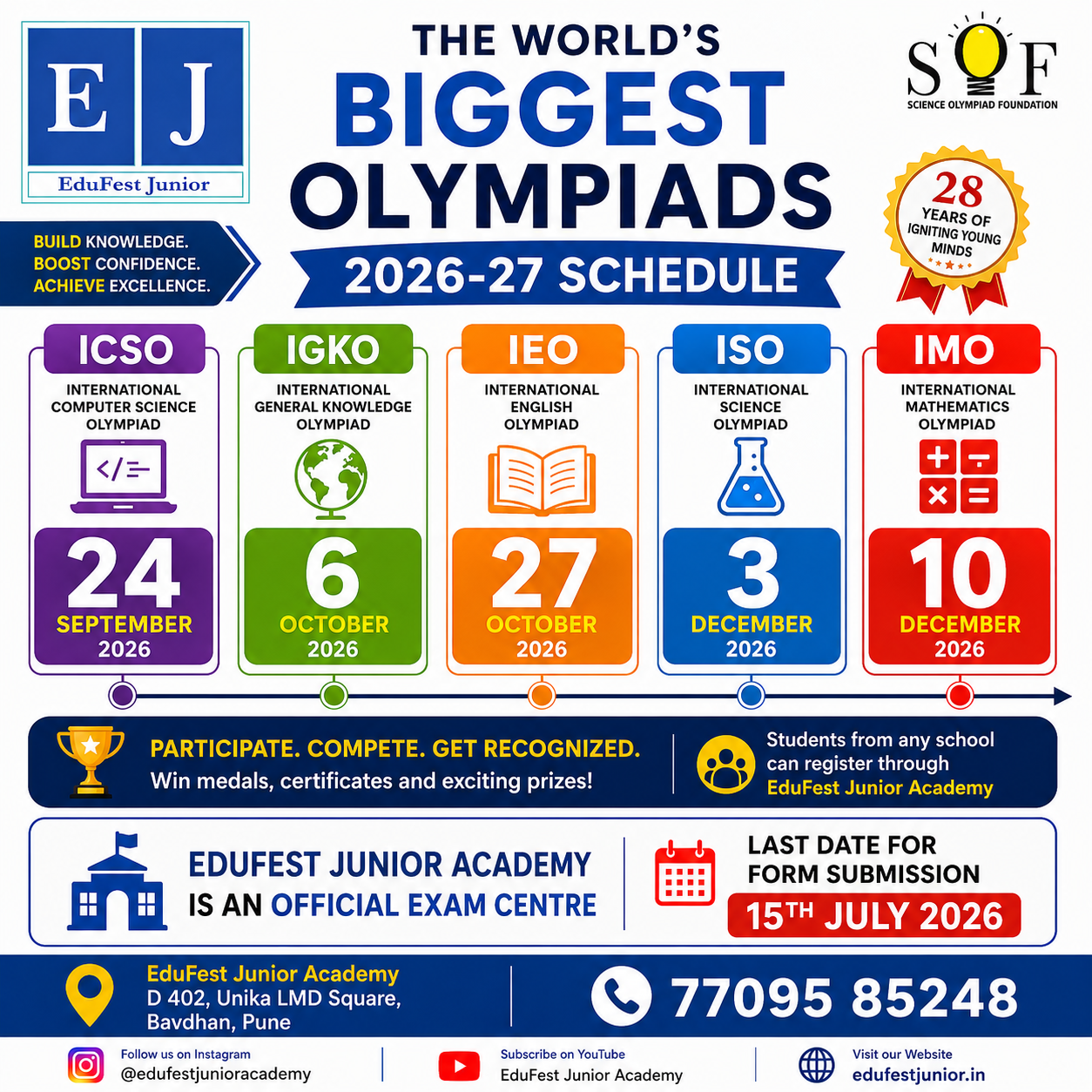
At EduFest, we help parents choose the SOF subject and preparation route instead of pushing every child into one plan. IMO may be right for a child who enjoys patterns and numbers. ISO/NSO-style preparation may suit a curious science learner. IEO may suit a strong reader. IGKO can be a good confidence-building start for some students.
Classes 1 to 4
Keep the focus on curiosity, reading, confidence, and light reasoning practice.
Classes 5 to 7
Build topic clarity and introduce mixed application questions steadily.
Classes 8 to 10
Use mock tests, error analysis, and Achievers Section practice to improve score quality.
Rank-focused students
Add previous papers, time strategy, and high-difficulty question review.
Get an Olympiad readiness suggestion
Tell us your child's class and the SOF subject you are considering. We will help you understand whether to start with IMO, NSO/ISO, IEO, or general reasoning practice.